Showing posts with label Changunarayan. Show all posts

Wednesday, June 13, 2018

4 New Ways to Help Changunarayan Village Rebuild


After 3 years with our Kay Garnay for Nepal, registered NGO, things are finally starting to move. You see, no matter what I want to do, I cannot actually do anything. I need a helper. Even something as simple as making a phone call is exasperating, not just for me but the person on the other end of the call. I can only ask, not micro-manage and there is always a wedding, festival or family member in the hospital. Now they are pushing me.

That being said, we have so many projects starting now-It’s invigorating. First, we have a new website that has a lot of info about Nepal. We are uploading the book I wrote for everyone to read for free, one chapter at a time as we get it updated. I had the eBook for sale, but I’d rather more people read it and have a better time in Nepal. http://WhatAboutNepal.org It's all free.

 If you want to buy from an affiliate link on our site we'll be offering some extra values. For example, we have a travel insurance finder affiliate link. If you find the right travel insurance there we can give a free room for the night at Star View Guest House as a ‘thank you’ gift. We hope to also have a Hotel booking site, as well as a few trekking guides we feel comfortable enough to recommend. But most of all, it will be everything you ever thought you’d want to know about Nepal-and then some.


We are also starting two women's initiatives, the first is for handmade,100% woolen hats and gloves. The second one is for hand-loomed pashmina, all excellent quality. If you live in a cool climate you'll love what we are doing. We are making micro-fiber lined, 100% wool hats and gloves for  a donation from $30, possibly including shipping. Today was the first day for the training. I guess that's why I'm all excited about it. Things move incredibly slow in Nepal and now it’s like the floodgates have opened.

We have a volunteer coming later this month who has experience in women’s workshop initiatives. She’ll be taking the lead and using her talents for the women in Changunarayan making pashmina scarves. We’ll be offering them at exceptional values to our sponsors. I am unable to use the business model many social initiatives use. They keep the women poor while getting an inflated price from their generous donors.


Our model is just the opposite. First, if you look at competitive products on the internet for hand-made, 100% wool hats you’ll find them for at least $45 plus shipping, but we are just starting up and really need sales. We can send you a hat and glove set for just $30 and we will be able to get the initiatives running with a break-even cash flow or maybe even earn a bit. We will be starting the women off with a normal salary they would get if they got a non-English speaking job in Kathmandu and would have to ride the bus for 3-4 hours per day. Now they can just walk up the hill to Star View Guest House. They have a room with a TV and box of DVDs for when they get beyond the beginner level. We also provide the women lunch and a home baked snack with their tea break. Next, we provide the women with a commission on each of their share of the sales so this should double their salary. The hours they need to work is just from 10 to 4 with lunch and tea breaks.  I’m sure this is much better than ‘fair trade’ guidelines.

Other than selling the pashmina and wool hat/gloves as a fundraiser for our own needs, we have an unusual proposition for any of our readers who’d like to help us. We have a fundraiser for the hats/glove sets for Western countries' high school football teams, bands, orchestras or cheerleaders. We'd love to find a student who would like to earn a trip to Nepal after graduation. We can even put the money in a bank account at 9%. We would purchase the ticket from here and give the cash after the student arrives.

We’ll custom make your high school colors with the initials on each piece, 100% high quality wool over micro-fiber lining. The hat will be the ‘Mohawk’ style in your school’s official colors or choose from other styles. The gloves will have open fingers with a cover and button. When we get the pashmina workshop going we can add a monogrammed scarf to complete the set. We can sell these in lots of 100 for a 50% split on retail of $60 without pashmina scarf. We ask 20% deposit with the balance 60 days after delivery, via Paypal invoice. This is not only an excellent value price-wise, but something that is in high demand for sports fans. If you have connections to a high school club or sports team please let us know. Let us know your ideas and suggestions, as well.


We also had an awesome guest stay at Star View and sent us start-up money for a Mt. Bike Rental concession for the village. We’ll had the bikes delivered already and they are quite nice. Actually, Rupak and his friends rode them from Kathmandu for us. I offered them lunch for their kindness. I know they love to go on rides and would do it for free, but still, we appreciate it.
Here the bikes are.

So, as we were working on the how’s of the project Anoj came by and wants to take the mt. bike concession as a ‘Tourist Information Desk.’  Anoj is a very kind villager whom I know I can trust with tourists to be honest and sincere and who doesn’t drink. We can do a lot of things for the village with 7-8 Mt. Bikes and an information center to help tourists stay in Changunarayan longer. We are so grateful to Parel, our donor for making this happen.

I’d like to thank everyone for your support, whatever it may be. Please follow along with us and help us by sharing our message, buy a hat and glove set, or click on one of our affiliate sites for original thangka paintings and hand-carved masks, travel insurance, etc. Seriously, the links aren’t even up yet, but I just wanted to share our plans. Nothing moved for 3 years and now everything is coming together.


Our travel insurance link will take you to the best value for your money on travel insurance. This is a shopping platform similar to Booking.com or Tripadvisor.com They are suppliers of the highest-rated policies from international travel insurance companies. Not only are the policies the same prices as offered by the travel insurance companies directly, but if you do need to put in a claim Insure My Trip will provide you with an advocate who will help you get everything you can out of your policy. You really do not want to go through it alone. Our affiliate link Travel Insurance link: https://www.insuremytrip.com/?linkId=... 
Learn more about Ama’s work in Nepal. (http://KayGarnay.org) We have an e-Book to help you have a great time in Nepal with even more tips. Our eBook, Nepal: A Tourist’s Manual. http://Payhip.com/Nepal 

Follow along with us
Twitter:
@FrugalTravelsNe
@KayGarnay4Nepal
@StarViewChangu
Facebook: https://www.facebook.com/frugal.travels
HelpX.Net: http://www.helpx.net/host.asp?hostid=17074
Website: http://WhatAboutNepal.org

#WhatAboutNepal #NepalTravelGuide #Nepal #FrugalTravelsNepal #TravelTipsNepal #TravelTipsKathmandu #VisitNepal2020 #NepalValues


Sunday, May 27, 2018

Why Changunarayan Village, Nepal Should be on your Bucket List


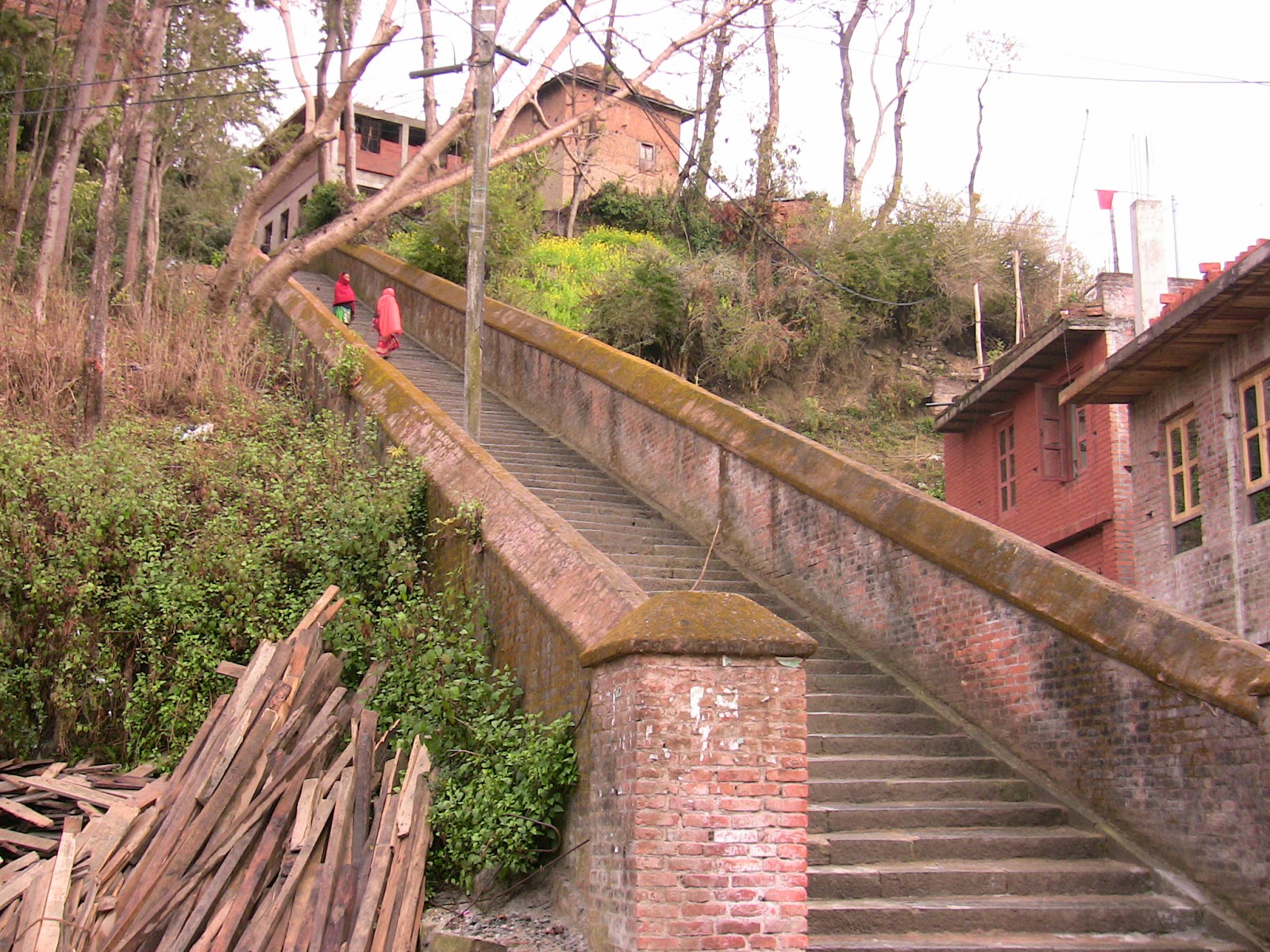
One of my favorite places to visit has been Changunarayan since the first time I rode on the back of a motorcycle up a dirt road to the village. It was like stepping into a story book. There were monkeys and an ancient, outdoor museum with idols and shrines so old and yet so beautiful. As I walked up the steps to the ancient temple the merchants were quite friendly without being overly pushy like the ones in Thamel, Kathmandu. It was lovely after getting there, but it was actually a dirt road for a couple miles.


That was in 2011. In 2012 I had another day helper who suggested a day-trip to Changunarayan. "Oh, no! I can't do that road!" "No, Ama," he explained. "There's a road now." I loved this sacred, ancient village even more with a new, paved road.

That was when I met Sanjay and Kamal, a couple of thangka artists with a little thangka school. They were so friendly and kind we soon became good friends. They always treated me with such kindness and respect and would come over to cook a meal with me or to take me to Kathmandu. Since then they've become family to me, in more ways than one, but that's another story.            

Kamal and Sanjay gave me this lovely thangka as a gift.

I began inviting my guests and tourist friends to meet these lovely guys and create their own souvenirs. They have a 3-day thangka painting course that everyone loved doing. Many tourists spend weeks learning this art style. 


The temple was so beautiful. After passing the merchants and craftsmen along the steps, the temple had long buildings called patis that created an enclosure for the many temples and idols inside. It was a nice energy shift as I came through the tunnel entrance. This ancient temple is the oldest Hindu temple still in use in Nepal. There are many festivals celebrated in Changunarayan each year, so be sure to check the Nepali calendar before you book your flight. Here's an upcoming festival.

There are also many ancient ponds and random shrines you'll discover along the way, almost as if strategically placed, as you scout out the area. The Nepali have no understanding of trespass, so if you cut through somewhere, as long as you don't damage anything, you will be met with a smile. There is a pine forest an INGO planted several years ago, which is quite nice and we have several trekking routes with lovely 1-day destinations.

I always liked buying souvenirs in this village. The prices are quite a bit better than in Thamel and you can often meet the artist or craftsman. Another of the friends I met here is Furba. He has a woodcarving shop and can even teach this craft with lessons. They aren't quite as popular as the thangka lessons but are quite a unique piece of art to take back home. The wood is a local, fast-growing tree that is not endangered. It's also fairly light compared to many kinds of wood, so if you see one you like it might fit just fine for your flight home.

One of the most popular gods in this village is Bhirab, the incarnation of Shiva birthed from his anger. Well, Bhirab is probably the oldest god still being worshipped because the ancient Newar people brought him here from ancient Babylon or possibly even before. Furba gave me one of these masks as a gift and I was pleased to put it on the wall. Well, the energy in the flat completely shifted and was much calmer. I mentioned it to my day helper and he told me Bhirab 'eats' anger. Although he looks fierce, if you are open to eastern spirituality, you might like his energy.

If you meet one of our local trekking guides they will tell you about many of the epics from the Hindu sacred scriptures that happened right here in Changunarayan. In fact, this is a village of miracles and myths. If you go up to the temple you'll find a huge rock that is halfway to becoming an elephant. As the legend goes, the craftsmen started making the statue in his rock carving shop. But when he went the next morning to work on it, it was gone. He found it up at the temple and brought it back to continue his work. The next morning it was gone again and that's where it remains, up in the temple courtyard.


Bhairab slew a demon right here, possibly on our hilltop, although it was most likely at the site the temple was built upon. Shiva lived an incarnation in a village just down the hill from Changunarayan. We have a museum where you can learn more.


Come through the temple and go down the steps at the back. Don't worry about having to climb back up; there is a road that goes around it. You'll come to the hilltop where there are a couple of benches to catch the sunset or views of Kathmandu and tips of the Himalayas. Watch the falcons soaring by, swarms of parrots, sparrows, silver crows and local birds.

Four years ago I decided I needed an entire building as my home. Kamal found this building and it's just like heaven to me. I can sit up on the covered rooftop and visit with guests, write content for our websites and social media or have a meal while I look out at the beautiful Kathmandu Valley and listen to the lovely birds and other village sounds.

If you come to Nepal I hope you'll take time to come to Changunarayan. It will be one of the highpoints of your time in Nepal.
 
Our travel insurance link will take you to the best value for your money on travel insurance. This is a shopping platform similar to Booking.com or Tripadvisor.com They are suppliers of the highest-rated policies from international travel insurance companies. Not only are the policies the same prices as offered by the travel insurance companies directly, but if you do need to put in a claim Insure My Trip will provide you with an advocate who will help you get everything you can out of your policy. You really do not want to go through it alone. Our affiliate link Travel Insurance link: https://www.insuremytrip.com/?linkId=... 
Learn more about Ama’s work in Nepal. (http://KayGarnay.org) We have an e-Book to help you have a great time in Nepal with even more tips. Our eBook, Nepal: A Tourist’s Manual. http://Payhip.com/Nepal
Coupon code: WhatAboutNepal


Thursday, May 24, 2018

How Eco Friendly is the Star View Guest House?


We try, we really do. We want to be as Eco-friendly as possible, but its really hard in Nepal. When I saw this list of 21 ways to make your rental property more Eco-friendly I just had to see how well we match up. How many of these does the Star View provide? 14 out of 21. I think you need to grade on a curve here, because it’s not always easy in developing nations.

Not only do we do as many of these things from Trinette’s list as possible, but we’ve put up trash baskets around the village and sponsor village clean-up days. We also plant trees, support the organic farmers whenever we can and always change the sheets between guests, none of which are the cultural norm in Nepal. We are also starting a mt. bike rental concession for the village. Our goal is to attract butterflies, so we are actively pursuing income generating projects, Changunarayan Women's Crochet Circle, hand-loomed pashmina, bike rental and two online websites: original thangka paintings and handcarved, wooden masks. and Everything you need to know about Nepal.


If you’re going to the San Francisco Bay Area I’m sure you’ll enjoy the Farmhouse Oasis. But if you go to the other side of the world, you can be assured that you’ll be just as welcome and just about as eco-friendly in Star View Guest House, Changunarayan Village, Nepal. Take a gander at this breathtakingly stunning vacation rental in California.

Thanks to Trinette at the Farmhouse Oasis and to Airbnb for keeping the environment in the mind of the consumer. It really is the only thing that matters on our planet. It’s a fight for our lives.


Trinette’s Must-Have List for Creating an Eco-Friendly Airbnb

http://1chicretreat.com/how-one-airbnb-owner-is-killing-it-with-an-eco-luxury-niche/
    1. Have a natural non-toxic mattress.
                          No, we have foam mattresses.
    2. Have natural, non-synthetic bedding materials.
                           No, we can get natural fiber mattresses but they are not comfortable. We have sheets that don’t wrinkle and excellent quality blankets, imported from Korea.
    3. Use natural non-toxic cleaning products.
                           Yes, we purchase an organic house cleaning product for kitchen and bathroom cleaning and use vinegar, lemon, baking soda that we make up ourselves. We are trying to get borax and such to make our own clothing detergent, but it’s really hard to find such things in Nepal.
    4. Use natural non-toxic paint and finishes.
                           No, this would be impossible in Nepal, but we use a lot of bamboo with just small amount of varnish and no paint.
    5. Use natural non-toxic soap for hands, dish soap, and shampoos/amenities.
                           No, we are trying to find a source in Nepal for the ingredients.
    6. Use natural essential oils for scent, never synthetic perfumes or diffusers (no Fabreeze or plug-in scent things). You can get an aromatherapy diffuser or just make your own room spray with essential oils.
                          Yes, we use non-poison methods for insect removal and use natural incense for scent. We are fortunate to be able to open the windows throughout most of the year.
    7. Install reverse osmosis water drinking filter (don’t use plastic water bottles). A shower filter or whole house filter is a big bonus to remove chlorine from shower water.
                          Yes, we have reverse osmosis water filter and offer it free to guests. We remind them to fill up before they leave so they won’t need to buy water. Our glasses and cups are glass. We are in the process of installing a whole house water filtration system so we can recycle the water. It has no chlorine, but who knows what’s in it? We have 90% of our water trucked in from the river near Nagarkot, but it’s completely untreated now.
    8. Provide a compost bin for guests and compost food waste. Provide a trash can that separates out recycling and trash (our recycling can is always more full when a guest checks out then the trash is). Most Airbnb’s only provide one trash can and it’s not environmentally friendly. I like the Simple Human trash can that has two slots, one for recycling and one for trash.
                             Yes, although we do not have an extra trash can, we separate the recycling for our guests. We compost and make sure the street dogs, village goats or chickens get our cooked scraps. Our village tractor comes by to collect trash and even recycles the plastic. It’s in its infancy, but we are proud of the effort being made by our municipality.
    9. Use biodegradable trash bags, as well as eco-toilet paper and paper towels.
                              No, these aren’t available here, but we do use the reusable, environmentally friendly shopping bags and limit plastic packaging whenever possible.
    10. Buy furniture without fire retardants and stain guards on them.
                               Yes, such things are not available here in Nepal, but even if they were we would not use them.
    11. Buy throws made with natural materials.
                                Yes, we use wool throws in our rooms.
    12. Use solar power for house or pool.
                                 Yes, we have a solar water heater and a solar panel to help provide back-up electricity as well as a battery. Sorry, no pool.
    13. Use salt water to treat pool or this amazing company that uses hydrogen peroxide instead of chemicals (we are planning on doing this when we have the money).
                                  Yes, although we don’t have a pool, we are in the process of getting a water filtration/recycle system to filter the gray water.
    14. If you provide coffee, tea, sugar, and creamer, make sure it’s organic (and local if possible).
                                   Yes, we buy only the finest quality of organic coffee from Nepal, as well as teas. We have refined, unrefined and even stevia sweeteners. We use Ayurveda brown sugar for our deserts.
    15. Don’t use pesticides or insecticides anywhere on the property (there are companies that treat pests with all natural essential oils).
                                  Yes, we never use poison. Sometimes we get a rat or mouse from the nearby garden that takes up residency in our kitchen. We use live traps and also have an electronic, sonic machine that discourages them from coming in. We also use the electronic bats for mosquitoes and flies to keep them out of the kitchen; this is a village, after all. We have mosquito nets in the guest rooms, so if you don’t want to kill anything you can still get a good night’s sleep. Our windows have mosquito netting/screens.
    16. Provide a HEPA air filter in sleeping areas.
                                No, we just open the windows. The climate is pretty mild and although they say Nepal has a lot of pollution we are above the Kathmandu pollution line. Part of the reason they say it’s so bad is because none of the water is treated. Although we don’t suggest you use the tap water for brushing your teeth, you are welcome to all the filtered water you need, for either when you are here or when you leave. We hope to help people buy less plastic.   
    17. No teflon or aluminum pans! Provide cast iron, ceramic, or stainless steel pans. Use glass storage containers rather than plastic.
                               Yes and no. We do not have teflon or aluminum in our kitchen, but we do use plastic containers for storage. However, we reuse many bottles and jars for a long time to reduce waste. We buy food in glass containers whenever possible.
    18. Provide wood, stainless steel, or silicone cooking utensils.
                              Yes, we only use wood and stainless steel cooking utensils. Actually, we just bought a silicone pastry brush and spatula for baking. I got excited when I saw them in the store.
    19. If you provide any spices, oil, etc, make them organic and high-quality.
                         Yes, we use organic and locally grown as often as we can and are growing a few herbs on our rooftop. We use locally milled, unprocessed mustard oil and coconut oil for cooking and butter as a condiment. We only use Himalaya salt and never MSG.
    20. Use as many natural materials and textures as possible, on rugs, curtains, furniture, pillows, etc.
                        No, we do whenever possible, other than pillows stuffed with old rags, these are not usually available here.
    21. My last suggestion isn’t eco-friendly per se, but it’s golden advice so I’ll list it anyway: have nice pots and pans for your guests and good sharp knives. Our last guest mentioned how much they appreciated our good quality pans and that our knives were actually sharp; they said that is “so rare in a rental.” We also have a feedback card that we ask guests to fill out before they check out if they have time. We have received lots of great feedback from that practice and have integrated requests into our rental, making it even better.
                          Yes, our kitchen is equipped with a food processor, bread toaster, refrigerator and oven, none of which are the cultural norm in Nepal. We even have a fire extinguisher and only use the reverse osmosis filtered water in our cooking. Our vegetables get a peroxide or vinegar soak prior to being served raw. We are also beginning a micro-fiber greens project so our guests can have more salads and healthy greens. The greens in Nepal can have a harmful parasite during the monsoon.
Subscribe to our Youtube Channel to get travel tips and tricks for travel through Nepal and other parts of Asia. 

If you like our tips and are looking for travelers’ insurance I think you will enjoy our affiliate link:     Shop from 10 travel insurance sites at one time here.

This blog post is supplemental to our video channel. If you enjoyed this post, you'll enjoy our videos. We explore one topic at a time with the intent to help you to have the best time in Nepal.
https://www.youtube.com/channel

This blog is also supplemental to our eBook, Nepal: A Tourist's Manual. $19.95 Use Promo Code to get 50% off: WhatAboutNepal

We also have a small guesthouse in Changunarayan Village, in the Kathmandu Valley. If you have an interest in staying with us for short or long-term stays, see our website at https://StarViewNepal.com
Follow along with us
Twitter:
@FrugalTravelsNe
@KayGarnay4Nepal
@StarViewChangu
Facebook: https://www.facebook.com/frugal.travels
Like our pages:
https://www.facebook.com/starviewretreat/
https://www.facebook.com/KayGarnay4Nepal/
https://www.facebook.com/Changu.Bhaktapur/
Instagram: https://www.instagram.com/kaygarnay/
HelpX.Net: http://www.helpx.net/host.asp?hostid=17074
Websites:
http://WhatAboutNepal.org
http://StarViewNepal.com
http://TraditionalArtofNepal.com
http://KayGarnay.org


Friday, March 23, 2018

Coming to Nepal During Monsoon-A Good Idea?

Changunarayan Travel Blog


Buffalo grazing in our nearby forest
in Kathmandu Valley from hilltop below the temple

Is coming to Nepal during monsoon season a good idea? People suggest coming to a country during the off-season. Nepal's off-season is from June to September and December to the middle of February. Can a person enjoy this country during those time periods? We know it’s going to be cold in the winter, but what about monsoon? What should a traveler know about Nepal during this time?

First of all, you need to consider why you are traveling at that time. Is it to save money? Surprisingly, many Nepali merchants do not easily discount during slow times as we do in the US. Instead, it is typical to see the merchant expect you to pay more because he is not getting any sales. Western tourists are often happy to comply, which brings the prices up for everyone. Don’t let your Western guilt or ego lead you into over-spending.

Along one of our local trekking trails.
Always book for one day if you book online. After the first morning you can talk with the manager and get a discount if you stay longer. I don’t recommend booking online for more than a day because booking sites usually don’t allow prices under $10, which means walk in traffic might pay less. If you are afraid you’ll have to sleep on a park bench because the guest houses are all full, don’t worry. Unless you are out on the trekking trail in a very remote place you are 99% sure to find a place. Yes, the 5 star hotels book up in advance, but the normal, independent, little guesthouses are seldom full. I know this because I have a guesthouse; there are way too many guesthouses in the Kathmandu Valley and Pokhara.

A traditional Newari home with garlic drying outside
How much does it rain during monsoon? Of course it depends on where you are in Nepal; Nepal has several different climates. Here in the Kathmandu Valley it might rain for the night or morning, but it usually clears enough to do what needs to get done during the day. It seldom rains all day or all night. It’s more likely 3-4 rain showers throughout the day.

If you come during monsoon, you will need to watch for slippery rocks as you walk. Many roads are paved with lovely, but slippery rocks. So, check your shoes to make sure they have enough traction. Plastic soles, as on cheap shoes tend to be quite slippery.

If you intend on doing trekking in the high country I don’t suggest coming during monsoon. You could slip on a piece of ice, but the main reason is you won’t have many beautiful views.
Monsoon view from Star View Guest House
It’s often a great disappointment. However, if you would like to do volunteering, an internship or work on your thesis monsoon may not be a problem, at all. The Kathmandu Valley is mild and downpours are usually of short duration. Kathmandu being so polluted, the frequent rains keep the air quality at permissible levels. Do not plan to see Chitwan, Bardia National Park or other areas along the Indian border; it is just too hot. During the winter off season you will enjoy Lumbini and these other places, but remember it gets chilly and damp at night. You will not need malaria tablets for these places unless you go there during monsoon.

Here in Changunarayan Village, at the eastern edge of the valley, we have gentle breezes and it often doesn’t rain badly enough for guests to come down from our rooftop terrace at the Star View Guest House.
Two goats playing in the forest
along one of our trekking trails
Unlike many places with a dependency on tourism, Nepali love to meet and get to know tourists. I am always amazed to hear a Nepali greet a tourist in their own language or invite them home for tea or a meal. If you come during either off season you will feel like a super star. Yes, there is some sense of being able to dip into a deeper pocket, but once you get out of Thamel or Kathmandu City you will find many Nepali who just genuinely want to get to know you.

Come to Nepal during our lovely spring or fall tourist seasons, during the monsoon or even in the winter, but please put Nepal on your bucket list and come see this amazing country. It has something for young and old alike and more festivals than days of the year.

Monday, October 12, 2015

Clean-up Campaign in Changunarayan

Written by: Maartje Geverinck, volunteer from the Netherlands 

Kay Garnay for Nepal, an NGO registered in Nepal, is the brain child of Amanda Summers, a retired expat living in the Kathmandu Valley. It is a humanitarian, nonprofit agency with the goal of supporting the artists, craftsmen and other residents of Changunarayan, an ancient village in Nepal, as well as those in neighboring communities.

Clean-up Campaign in Changunarayan


People talk about how Nepali are litterbugs and don't care about the environment. There are actually some good reasons for this to appear to be true.
 
First, there are very few sanitary landfills in the entire country. Additionally even municipalities will use the river as dumpsites.

We, at Kay Garnay for Nepal, NGO, wanted to clean Changunarayan before the coming festival, Dashain. Our chairperson, Sajana, purchased gloves and other clean-up gear and about 50 people participated in the morning activities. This was our first of such community activities, so we learned a lot.

10 October 2015 - 7 o' clock in the morning


People in Changu gather to start picking up trash.
Gloves, mouth masks and some homemade litter spears were provided.
All in all about 50 people, young to old, were eager to start cleaning up their village. There was only one tourist among the volunteers.

Sajana and I went together as we picked up litter.
Rather than using plastic bags, we used bamboo baskets and wheelbarrows to collect the debris.

Bio-degradable organic materials were supposed to be put in one pit and another one dug for the plastics.
However, that didn’t happen as planned.
Afterwards, according to our plan, a truck would come from Kathmandu to collect everything and take it to the recycling center - not to the river or burned.

The locals weren't informed properly to make this first clean-up campaign successful. There was just no awareness that if, for example, you sprinkle insecticide along the road most of the insects will just move to a nearby garden or farm.
Yes, posters were made beforehand and distributed to places frequently visited by locals, but there was a lack of knowledge on how to start cleaning and how to get rid of the trash. We need to keep in mind as Westerners that it was we who introduced such poisons into this environment only 60 years ago.

While seeing how everyone was working and doing all the best they could, I saw boys cutting greenery from the walls with bamboo sticks and girls using the Nepali brooms to push the cut greenery from one side of the road down the hill. Not all plastics were removed first and the greens and sand were just put on top. So I was witnessing a worst case scenario. But yeah: “Kay Garnay” (meaning: “What to do?”)

The problem is that you cannot blame the Nepali people. They do not get the required education to obtain the right knowledge on how to keep the Earth clean and safe to live on.

In my head, several new ways of how to tackle this situation have arisen meanwhile. We could find some handy pocket-size reusable bags and distribute these among the locals so that they can do their grocery shopping etc. by using these bags.

Also, we could make a presentation showing kids in school, ages 14-15, the 'Circle of Life' – and meanwhile hoping they will spread the message and be a living example of it.

Furthermore, a great effort must be done to reach the outside world by spreading messages about the actual situation and hopefully we will attract more eco-minded people to volunteer and help not only this city, but the entire Nepal with their ideas.                                                                                                                                My eBook is available now at https://payhip.com/b/sQu5 If you are planning a trip to Nepal you'll enjoy it. It will save you time as well as money, but more importantly, it will help you to have a better time in Nepal. Many people wonder if they can eat the street food like in Thailand or Vietnam. 


Here's my spoiler alert: Do not eat the street food in Nepal, nor should you eat at any buffet. The eBook addresses such things as this and what to do if you become ill, etc. Whether or not you get my book, please read this short, free eBook. It will help you get your time here off to a great start. http://bit.ly/2aGxcuHIf there is a problem with the download or code please let me know at FrugalTravelsNepal@gmail.com 

Promotion code for discount: GR5X4BCHX2 

If you''d like to connect on social media with me here's   how: 

Twitter: @FrugalTravelsNe 
Facebook: https://www.facebook.com/frugal.travels 

Monday, August 18, 2014

Doing Nepal a bit differently


Instead of staying in Thamel and taking a taxi where they want to go, there is a better way. This info is taken from information in my book, Nepal: A Tourist's Manual, eBook.

First, take a quadrant of the Kathmandu Valley to explore. Changunarayan/Bhaktapur, Kopan, Pharfing, Kirtipur. So book your room online for the first night or two. This usually gets you a free, or reduced, ride from the airport.
Changunarayan is nearby Bhaktapur, an ancient village that will give you more of a 'genuine' feel. Using this example, book your room at Star View Guest House & Retreat Center or another guest house in Changu. There are several things to do, from painting your own thangka to exploring the nearby villages that each have a unique flavor. There are also 2 museums to explore. It's really quiet, too.


Tuesday, March 4, 2014

Sometimes It’s Good to be Last

I’ve known I needed to find another place to live since last winter set in. The Nepali family that also lives in the building kept a draft going all day long. It’s culture and I’ve learned that’s one thing you just can’t argue. Then a couple of other ‘cultural’ issues arose and right on time, another perfect place to live came my way. I say another because no matter the cultural issue, I just couldn’t find another apartment that I like as well as this one. 

I decided I needed to rent an entire building so I could make sure it’s warm enough for me. Imagine it being a nice, winter’s day, but the apartment is colder than outside. That’s been the issue here since I moved in. 

Then one day my dear friend and Nepali son, Kamal, called to tell me he found an entire building for me. One problem with it is that it’s in Changunarayan, a village I knew had water issues. I was pleasantly surprised to learn the community has installed a reserve tank, so the water issue is as resolved as it can possibly be. That means they do still run out of water, just not so often. Bhaktapur and Kathmandu are the same. 

The other issue with Changu is regarding the location of the village itself. There is only one road to it and it’s a bit further from Kathmandu, which means an extra bus ride for tourists traveling by local bus. On the plus side, the energy is amazing there and there is a road being built from the other side. In a short year or two, I will have the first guest house tourists see in Changu. Changunarayan is the oldest temple in Nepal still in use. It’s being preserved and restored very nicely. The people in the village are Tamang and other indigenous castes that are laid back and kind. I enjoy all my Nepali friends of various castes, but I’ve noticed a few of the castes have an entitlement that causes a lack of respect toward tourists, even when their income is primarily from abroad. It doesn’t make sense to my inner psychologist. 

When I saw this building all my resistance was gone. Yes, there are a few functional issues to deal with, some bathrooms do not have sinks. I’ve stayed in buildings with the staircase coming up into the middle of the floor like this one, but the builder/owner will put doors on each floor to keep the draft out. I will invest in a good insulation product to keep the cold from coming up through the floor. So, issues dealt with. The guest house is located right at the edge of Changu Narayan Temple Village, just outside the Westgate of the Temple. 

Although newly constructed, the Shaman’s Way Guest House, as I will name it, blends quite well with the existing, ancient arctecture. It is built to withstand a category 9 earthquake and has such modern conveniences as Western toilets throughout. When you see construction like this you can be assured it’s rated to be earthquake safe. Nepal has a major earthquake every 75 years. Sure enough, in 2011 the big one came. Fortunately for me, since I was in Thamel at the time, Sikkim, Delhi and Islamabad took the worst of it. Thamel is not the place to be when an earthquake comes. 


Changunarayan Temple Village is an amazing step back in time and a person can spend hours just gazing out the living room window at the Himalayas off into the distance and local activity nearby. One of the things I love about my current apartment is the views of the lovely mountains. The view is even better from Changu, and this building than where I am now. What an incredible step up and I didn’t even know a step up was possible.


As you can see, we aren’t quite ready for our first guest, but it will be lovely. Each floor will have a common area for watching TV or just relaxing. There are only three rooms for guests on the two full floors with a suite and small room on the rooftop level, for a total of 8 guest rooms.

We will have a little kitchenette area where our guests can make a cup of coffee via our French press or our little Italian Moka style, tiny pot. We will not allow Nescafe on site. We’ll feature only Nepali Organic coffee and our guests are welcome to make it anytime. We will also have fruit and pastries in the mornings for guests who want to get started early. This area will be located on the landing at the stairs on both full floors between the large suite, guest room and the common living room. This will have a gas stove, coffee, assorted, organic teas, sugar, fruit and assorted breads. It will be self serve and all you want.


This is right out my front door, community land so no one will hide the magnificent views. I want to get some tents to rent for this area. 


There are some nice walking paths and a couple of trails will take you to Bhaktapur or Nagarkot by walking. They make for a great warm up trek.
 
Any inquiries for booking a room, please contact me at:
Amanda +977 984 993 0812 or at FrugalTravelsNepal@gmail.com


Additional amenities at our guest house:
Yoga/Meditation room
On-site therapeutic massage room
Library of healing DVD’s
Library of Travel books for Nepal
 

Did you know I wrote an eBook filled with tips on getting the most out of your visit to Nepal?

Satisfaction Guaranteed: NO FINE PRINT. If you don't truly love Nepal: A Tourist’s Manual, please send for 100% money back. If you are not completely satisfied just send your purchase information along with a note to: FrugalTravelsNepal@gmail.com

Nepal: A Tourist’s Manual-For more information check out our website. If you enjoy this blog and the website you will enjoy the 299 page eBook. It is a well illustrated, easy read with over 1,000 tips to help you get the most out of Nepal.

http://www.unconventionaltourist.com/


This day was a bit hazy since it rained the night before.


Did you know I wrote an eBook filled with tips on getting the most out of your visit to Nepal?


Satisfaction Guaranteed: NO FINE PRINT. If you don't truly love Nepal: A Tourist’s Manual, please send for 100% money back. If you are not completely satisfied just send your purchase information along with a note to: FrugalTravelsNepal@gmail.com

Nepal: A Tourist’s Manual-For more information check out our website. If you enjoy this blog and the website you will enjoy the 299 page eBook. It is a well illustrated, easy read with over 1,000 tips to help you get the most out of Nepal.


Visit my website: Nepal: A Tourist's Manual